New research explores how vibration feedback and motion-tracking software can deliver affordable physical therapy to slow the progression of Parkinson’s.
For people living with Parkinson’s disease, consistent physical therapy is one of the most effective ways to preserve mobility — but many face barriers to care. Now, researchers in the College of Engineering are exploring how a low-cost, wearable device could bring that therapy home.
Sol Lim, an assistant professor in the Grado Department of Industrial and Systems Engineering (ISE), saw an opportunity to bridge the care gap. What if haptic devices, tools that guide movement using vibration, could help patients continue therapy remotely?
“With Parkinson’s disease in particular, regular physical therapy can really help slow disease progression,” Lim said. “Remote video sessions could help patients stay motivated and engaged with their rehab routine. Our vision is to make this an affordable, at-home tool for people who don’t have easy access to physical therapy.”
A gentle nudge toward better mobility
While video-based sessions have expanded access to physical therapy, they still fall short in one key way: they can’t replicate the hands-on guidance a therapist provides in person. That missing tactile feedback, like a gentle nudge to lift an arm or correct a movement, is often essential — especially for patients with neurological conditions like Parkinson’s.
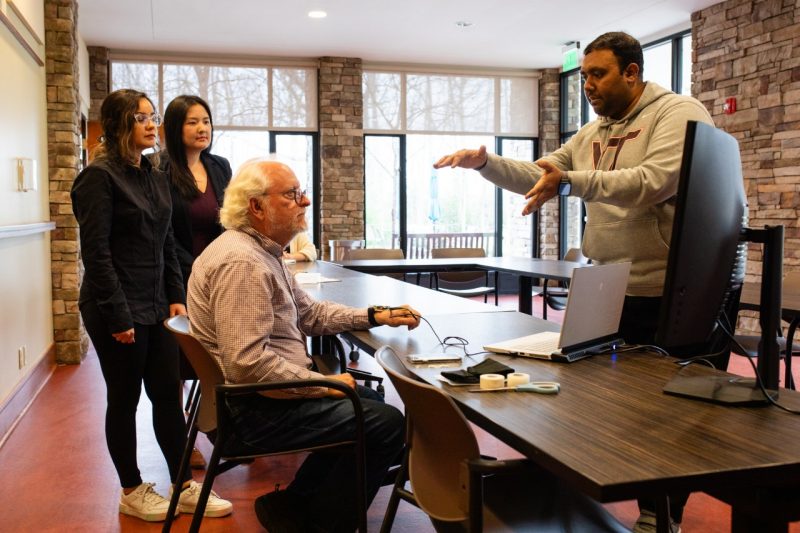
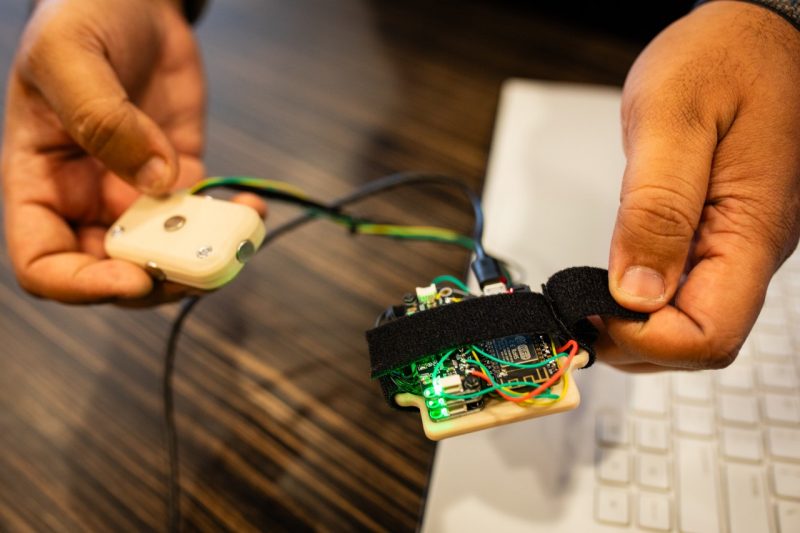
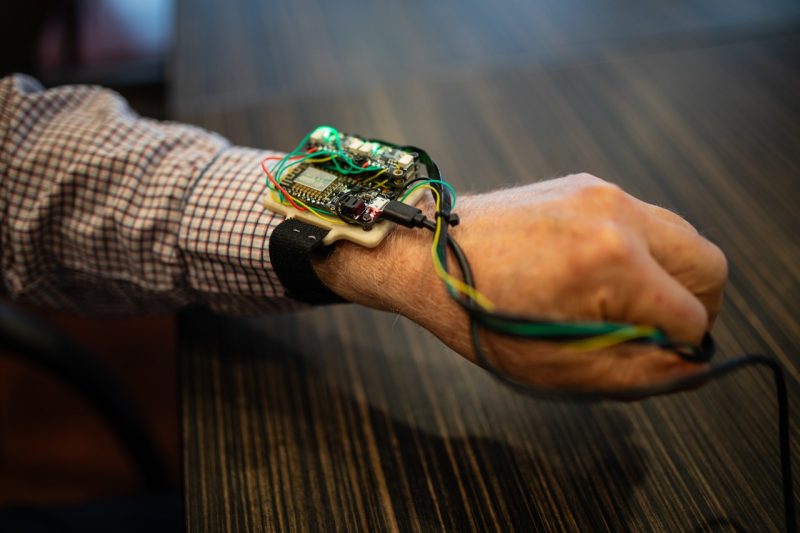
Lim partnered with Seongkook Heo, a professor in computer science at the University of Virginia who specializes in haptic technology, to develop a lightweight device that’s about the size of a pebble and fits in a user’s hand. Inside, tiny vibration motors create directional pulses that gently guide the hand through specific motions, simulating the tactile feedback a physical therapist might provide during an in-person session. Paired with motion-tracking computer-vision software and a screen-based interface, the system helps users stay on course during exercises by nudging their hand back when they drift off the intended path.
“We’ve developed an interface where we can define a start and end position, like touching your shoulder and lifting your arm overhead,” Lim said. “The patient follows that movement path, and we track their motion using a camera. If their hand strays from the ideal trajectory, the device provides feedback to nudge it back on course.”
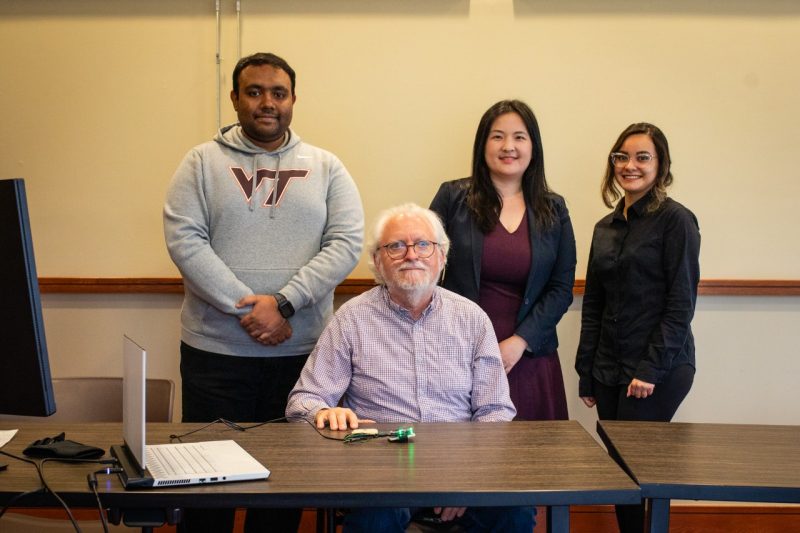
In addition to Heo, Lim’s team is composed of other Virginia Tech researchers, including:
- Maury Nussbaum, John Grado Professor in ISE
- Md Shafiqul Islam and Mahdis Tajdari, Ph.D. candidates in ISE
“My research focuses on inclusivity and accessibility, and this project really aligns with that,” Islam said. “It’s about making healthcare — specifically physical therapy — more accessible, especially for people living in rural areas. Some individuals need physical therapy three times a week, but their insurance only covers one session. This device is designed to help bridge that gap by allowing patients to do rehabilitation exercises at home, without a therapist physically present. “


Developing accessible care close to home
To test the device, Lim partnered with Warm Hearth Village, a retirement community in Blacksburg, and worked closely with their team of physical therapists to identify participants.
“Once we had the concept, I reached out to local organizations to gauge interest. Warm Hearth was incredibly supportive, and they’ve helped with participant recruitment and have even offered their facilities for our study,” Lim said. “They run strong fitness programs for residents and others in the community with Parkinson’s.”
One of the participants, David Seriff, started using Warm Hearth’s rehabilitation programs after being diagnosed with Parkinson’s in 2022; he joined Warm Hearth’s boxing class to work on his balance, mobility, and flexibility. When he learned about Lim’s research through the staff at Warm Hearth, he knew he wanted to get involved immediately.
“The hard part about Parkinson’s is the inevitability. It’s progressive. The idea that, at some point, I might not be able to use my left hand at all is really tough. So when I heard about this research, I was happy to volunteer,” Seriff said. “Regular physical therapy that helps with tremors and enhances my ability to use my left hand is incredibly important.”
The future of haptic rehabilitation
The haptic device is only the beginning of the road for Lim and her team.
This is the first year in a two-year project funded by the Commonwealth Health Research Board, with the goal of focusing on testing the effectiveness of the device over time. Next year, the team will launch a longitudinal study where patients will use the device at home for eight weeks without a therapist present.
Additionally, Lim hopes to develop an automated system that can track a patient’s progress and show how often and how accurately they’re completing their exercises. That kind of feedback can help keep them motivated — all while keeping costs low by reusing recorded therapy instructions, rather than needing live one-on-one sessions every time.
“We want this device to feel like someone is there with the patients — guiding them, supporting them, and keeping them engaged in their care,” Lim said. “If we can help patients stay motivated and moving, even when they’re alone, that’s a powerful step forward.”
Photos and video by Peter Means
If you want to have an impact on our students and faculty like those featured in this magazine, go here to support the College of Engineering. For more information, call (800) 533-1144.
-
Article Item
-
Article Item
-
Article Item