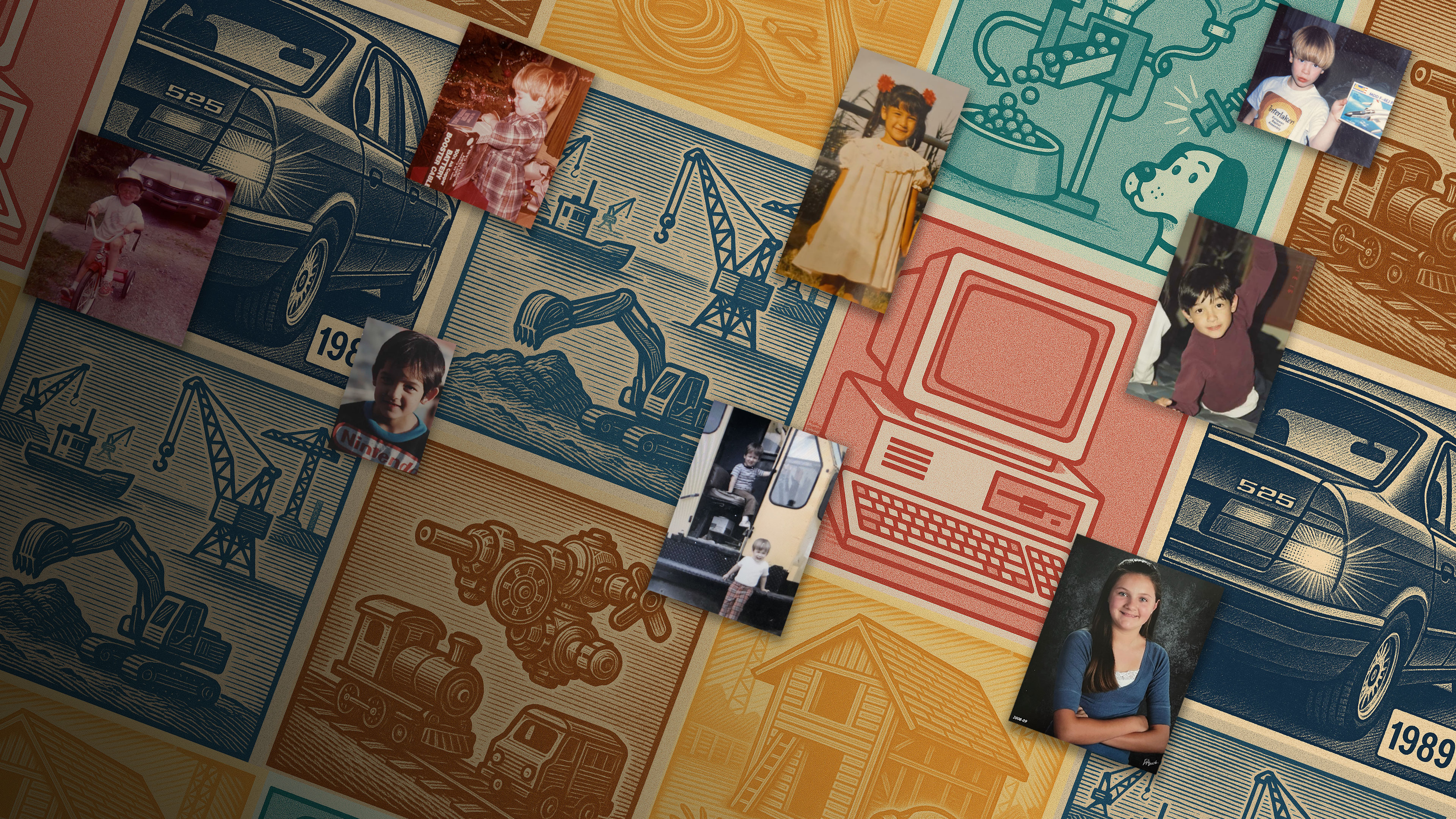
Six faculty members share a look inside the curious, cobbled-together childhood moments that ignited a love of engineering.
Every superhero has an origin story. Turns out most engineers do too.
A particular passion for LEGO or video games. A fascinating visit to a factory. A yen to dismantle a toaster (and leave it in pieces on the kitchen table).
Many engineers can identify one or two childhood experiences that first kindled their interest in solving problems or knowing how things work — and they often had an encouraging adult in their life who fanned that spark of curiosity into a vivid flame.
According to research by Marie Paretti and Holly Matusovich, both professors of engineering education, students tend to pursue engineering as a major because someone along the way noticed their natural interest and gently steered them in the right direction. “Very often it was someone who could make a connection, who could say, ‘You like doing this? Engineering might be a career path for you,’” said Paretti. “It's not about everybody being an engineer. It’s about everybody being able to see engineering as a possibility for themselves and making an informed choice.”
We asked six College of Engineering faculty members to share their own engineering origin stories. Here’s what sparked their initial interest in the field and who fanned the flames along the way.
The spark: Fixing a car
Jordan Budhu, assistant professor and Steven O. Lane Junior Faculty Fellow, Bradley Department of Electrical and Computer Engineering
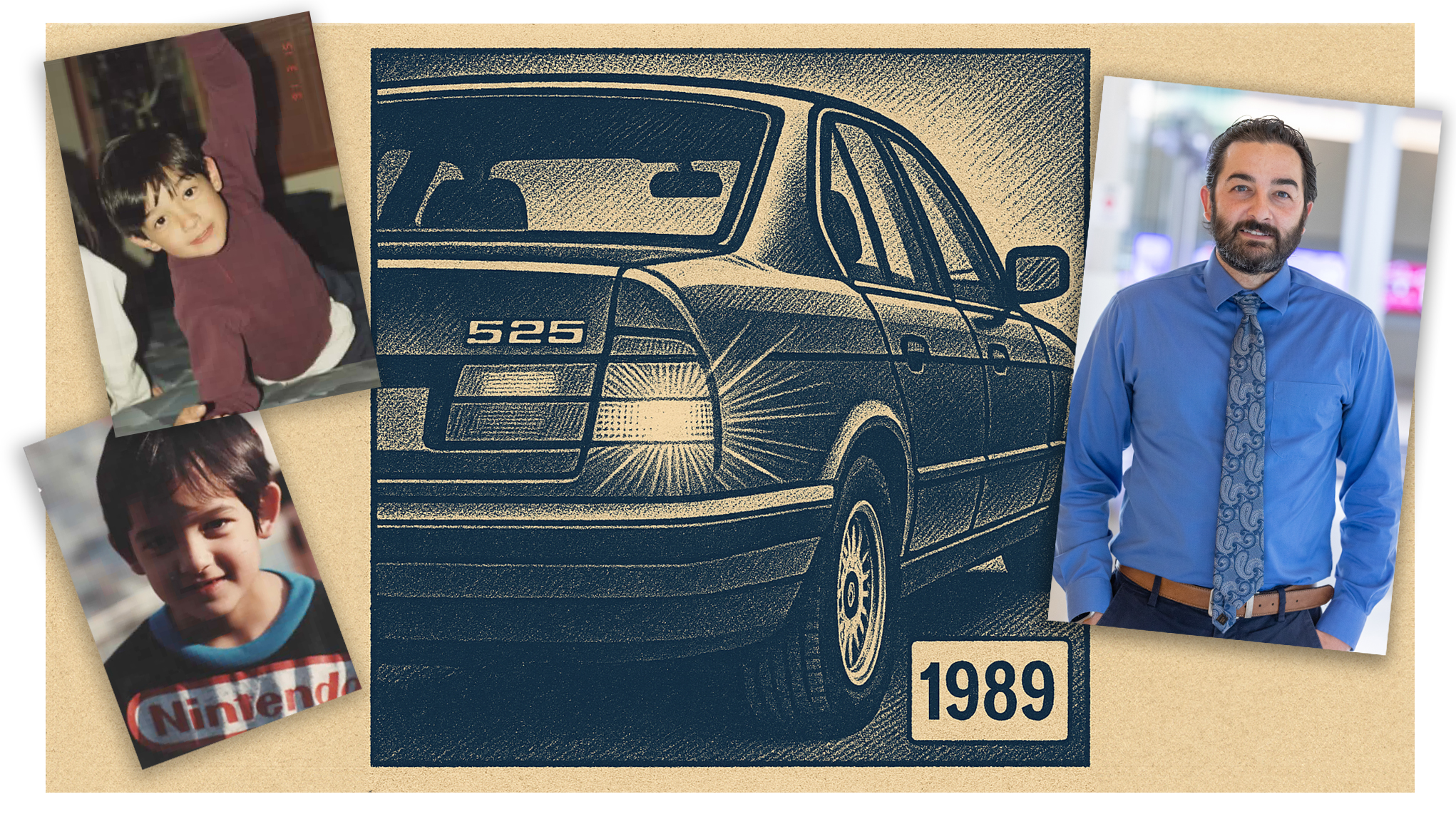
My mom used to get upset because I’d take things apart. When I was six or so, the brake light went out on her 1989 BMW 525. She was talking about calling the mechanic, and I was like, “I can fix it, I know I can!”
“Do not touch my new car!” she said.
But I snuck out later and fixed it. It was easy. I just changed the lightbulb, honestly. But she got so excited that when her car window wouldn’t roll up, she let me take the door apart and fix that too.
I had this attitude of, “I can do anything” — and that probably came from my mom. When I was young, I got a walking dinosaur kit for Christmas. Trying to put it together, I got frustrated and threw it across the room. My mom picked it up, brought it back over, and said, “Let's sit down and do this slowly and correctly.” And we built it together. I'll never forget that.
The spark: Building a Rube Goldberg machine
Holly Casey, assistant professor of practice, Charles E. Via, Jr. Department of Civil and Environmental Engineering
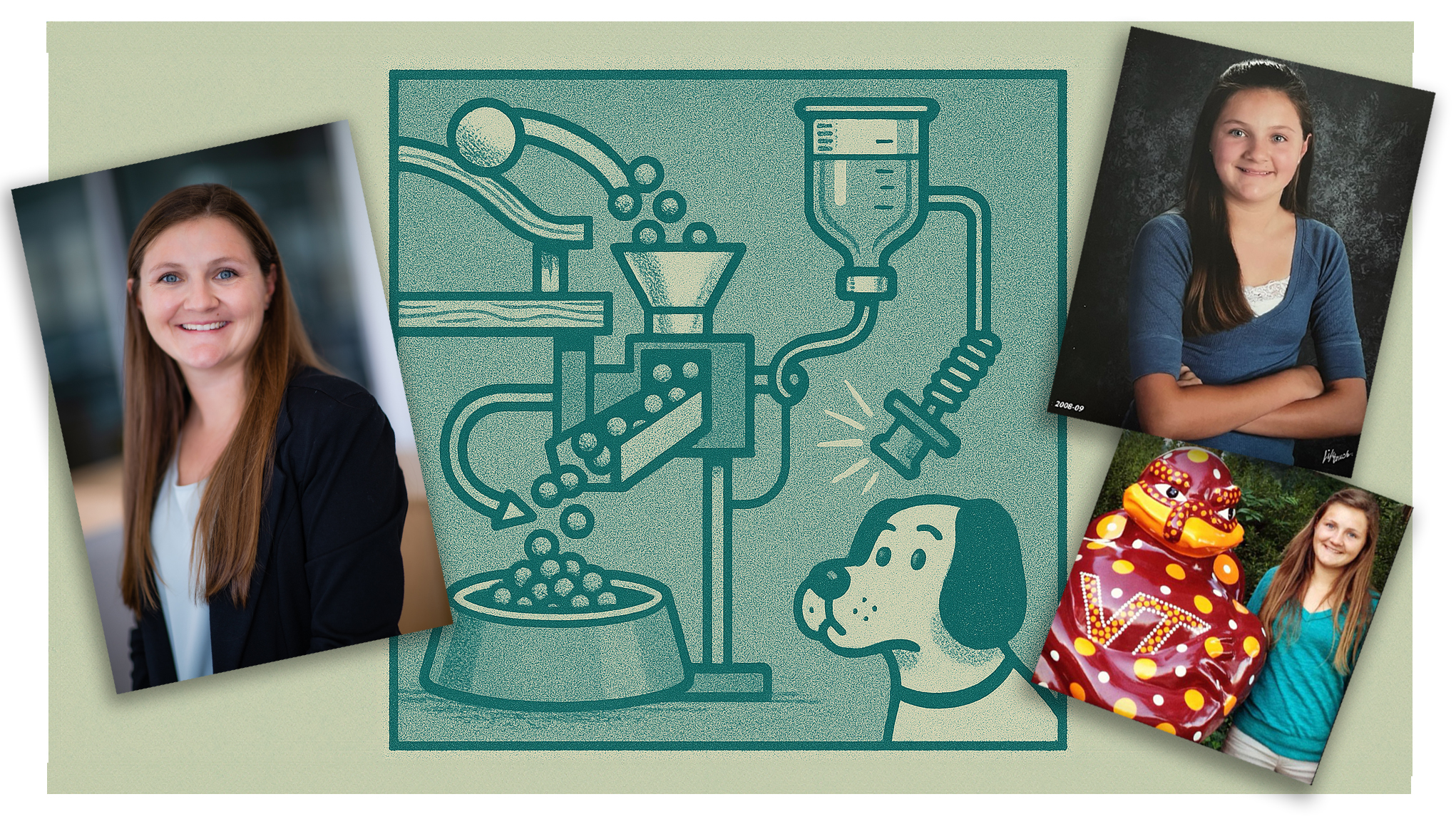
In high school, I was given an assignment to build a Rube Goldberg machine — an intentionally overcomplicated device designed to complete a simple task. I decided to make one that would empty dog food into a bowl for my sheltie, Kasey — but it had to have ten steps to get there. To trigger the chain reactions, I used whatever I could find around the house: pulleys and clamps from my dad’s workbench, old DVDs that would domino into each other, a field hockey ball that rolled down a ramp, and lots of duct tape to stick things together.
It definitely didn’t work the first time. Or the fourteenth. I had to go through many iterations of testing steps and going back to adjust and repair. It was frustrating, but when I finally got everything to work, I felt deep satisfaction. This project gave me one of my first hands-on experiences with the kind of problem-solving and iteration that engineering involves, and it was even more impactful because I felt a personal connection to it. After all, it was feeding my dog.
The spark: Helping build the family home
Annie Pearce, associate professor of building construction, Myers-Lawson School of Construction
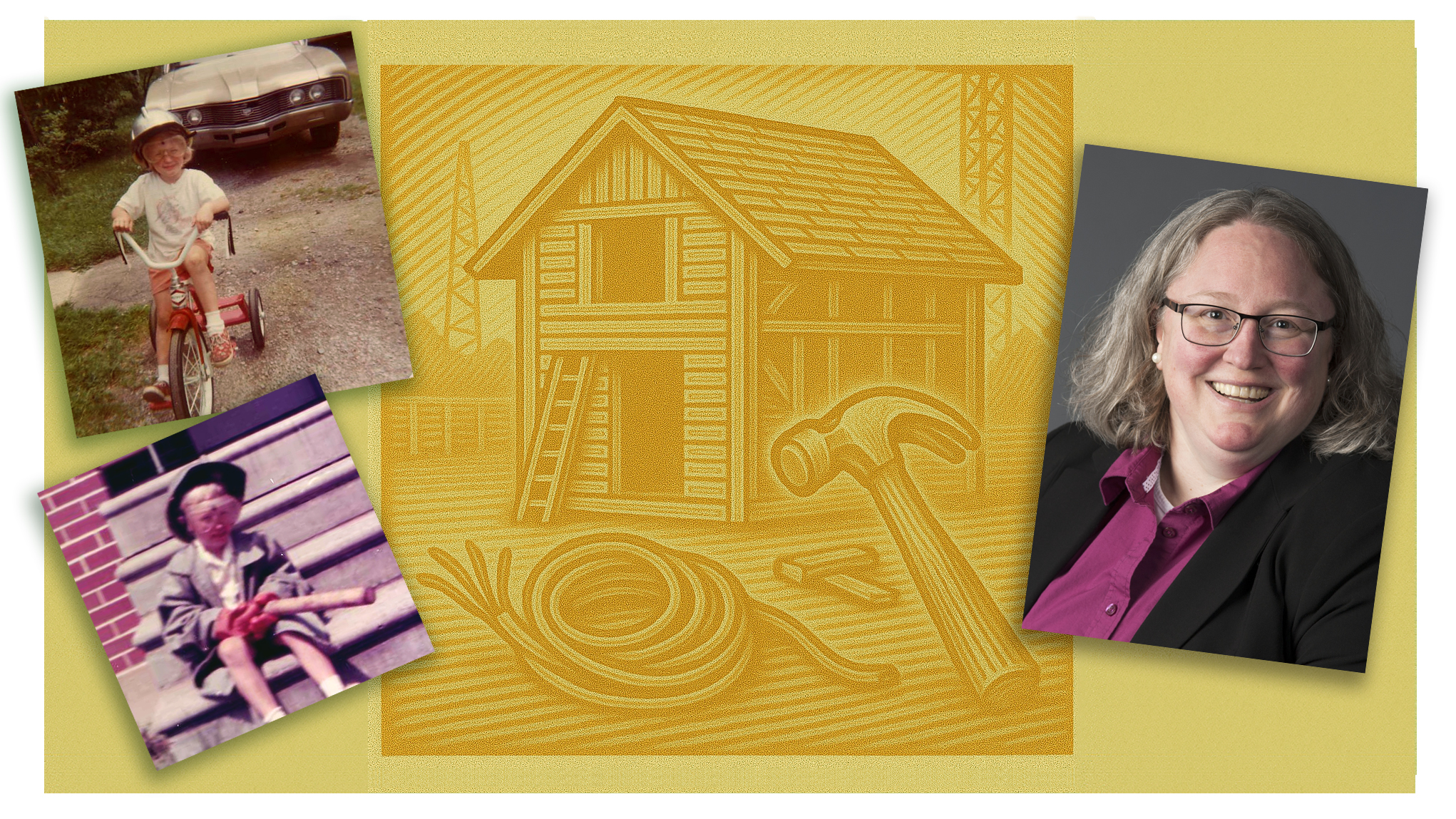
When I was five years old, my parents were building a new house for our family in rural Pennsylvania. Fetching hammers, climbing ladders, and crawling into tight spaces might have been a little hazardous for a kid, but it got me interested in how buildings come together. My grandfather who’d worked as an electrician helped me strip bits of copper wire and gather the metal punch-outs from the brand-new electrical boxes so we could recycle them for cash.
Meanwhile, my other grandfather, who owned a concrete masonry business, helped pour the slab. He was always pointing out a milking barn or a small dam and saying, “I built that!” on our Sunday drives through the countryside. Years later, when I was applying to graduate school, the chair of the construction engineering and management program started pointing out all the skyscrapers he’d built in Atlanta. It was like being with my grandfather again! I felt right at home and thought, “I can scale up from a dairy barn to a skyscraper.”
The spark: Breaking a Capsela kit
David Gray ’00, M.A. ’02, Ph.D. ’10, collegiate assistant professor, Department of Engineering Education
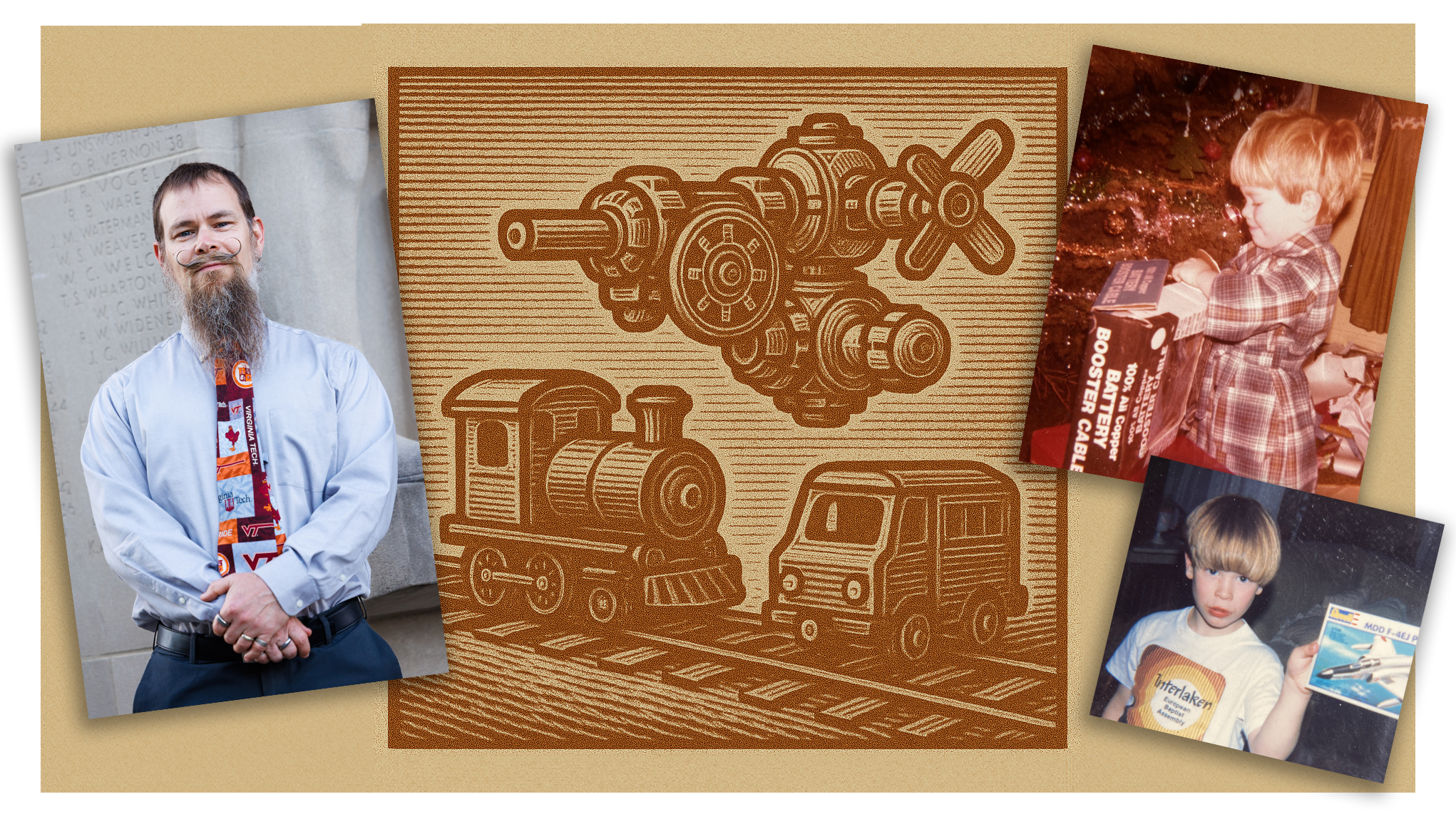
When I was nine, I was a little bored and looking for some trouble. I had a Capsela set, which was a system of interconnecting plastic spheres, each with a different function. Some had a little motor inside, some had gears, some had propellers or wheels. You could stick the spheres together and make things happen, like getting the motor to move the gears.
At the time I also had a model electric train with a variable power supply that connected to the train tracks with two wires. When I saw that a little 1.5V AA battery made the Capsela motors spin, I wondered what the electric train power supply would do. So I replaced the battery with the train wires, put those in the plugs of a Capsela sphere, and slowly ramped it up so the propeller started going faster and faster. I probably threw 20 or 30 volts of DC current through the propeller. I watched the Capsela fly until smoke came out. The train was fine, but I killed the Capsela motor.
That’s when I decided that I would learn enough to understand what had happened, a mindset that eventually led me to engineering. My attitude is, “Let's just start plugging batteries into circuits and see what explodes.” With my students, we throw experiments at the wall and then talk about what we learned from breaking things. It sets them up to know what failure looks like, not be afraid of it, and know how to move forward.
The spark: Going to worksites with an engineer father
Matt Nowinski ’91, M.S. ’93, collegiate associate professor, Department of Mechanical Engineering
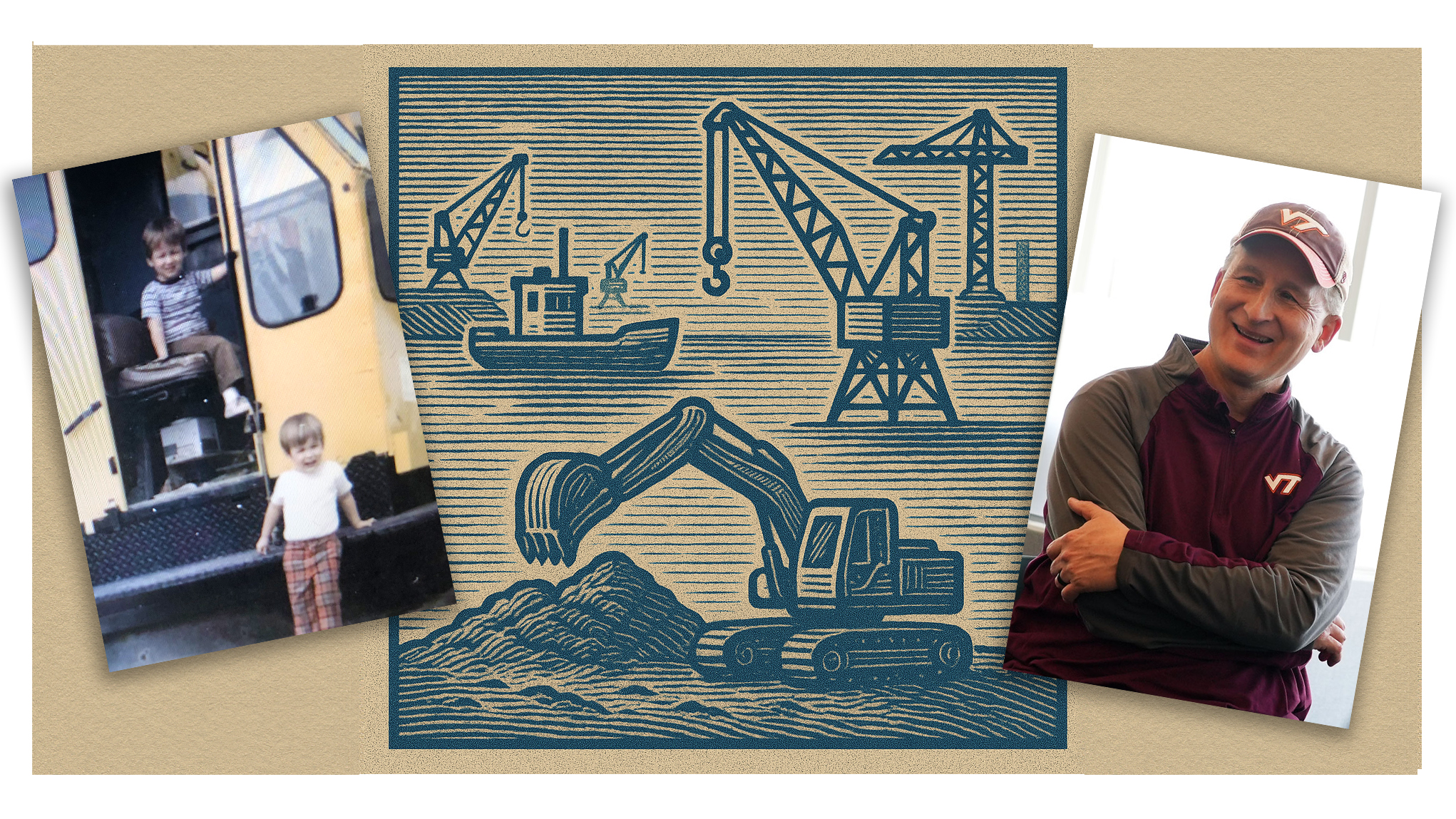
My Dad, Stan Nowinski, was a civil engineer working in heavy hauling — think steam generators for nuclear power plants. Every so often he would take my brother and me along to job sites, I’m sure to get us two boys out of Mom’s hair. I was fascinated by the machinery, the hard hats, and the magic of lifting and transporting such colossal objects. We’d explore the cranes, the barges, the derricks, and the machines that dig dirt. It was a playground for a little kid.
My dad died when I was 14, well before I decided to pursue aerospace engineering at Virginia Tech. But I also remember him taking us to McGuire Air Force Base in New Jersey for an air show, which inspired me. That plus the early Apple personal computer he brought home led me to more than 25 years as a software and systems engineer at Boeing. Not by coincidence, I now teach the introductory programming course for all entering mechanical engineering sophomores.
The spark: An early computer class
Sally Hamouda, collegiate associate professor, Department of Computer Science
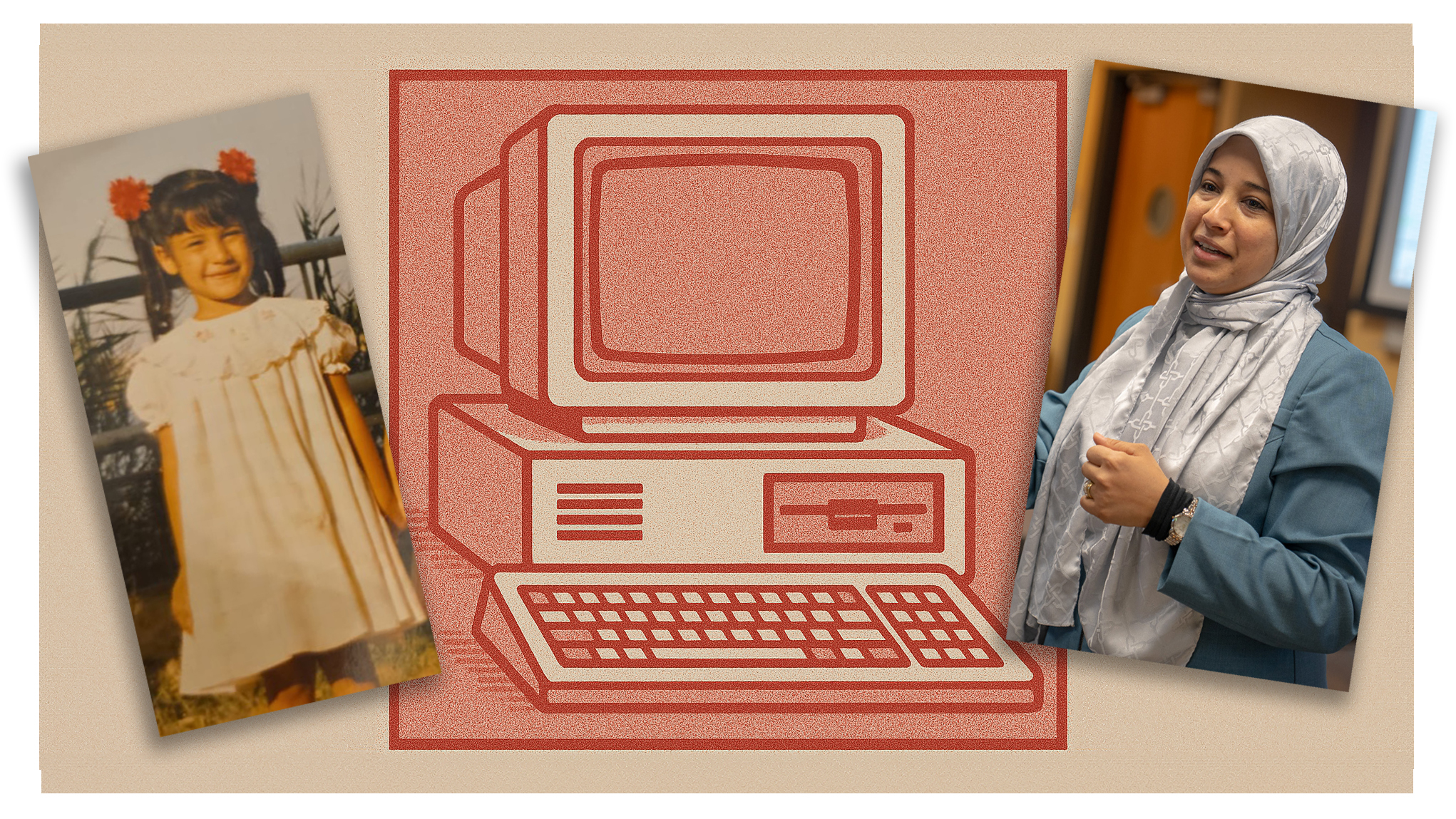
My mom, an agricultural engineer, bought me my very first computer when I was four years old — the very first Arabic English computer on the market. This was in the 1980s, in Cairo, Egypt, and I was a student at a private school that offered computer classes. I took BASIC programming classes at school, then went home to apply what I learned on my computer. I remember trying to make a robot with instructions from a little book: Write a sentence and a rectangle will appear. Write another sentence and another rectangle will appear. Because I loved art, I would draw things and change the colors.
I was an only child, and my mom dedicated a lot of time to teaching me from an early age. She also told me, “Don’t worry if the computer gets broken — we will fix it.” So I learned a lot by exploring on the computer, and every few years we’d get a new one. As a teenager I taught myself how to do graphic design; I mastered Word and Excel and then volunteered for a charity organization to teach kids how to use those programs. All that time I spent on the computer, trying to get something to work, inspired me to become a computer scientist and teach kids how to program at a young age.
What childhood experience sparked your interest in engineering? What have you done to ignite the spark for a child in your life? Share with us and we may feature your answer on social media or in a future issue of Virginia Tech Engineer Magazine.
If you want to have an impact on our students and faculty like those featured in this magazine, go here to support the College of Engineering. For more information, call (800) 533-1144.
-
Article Item
-
Article Item
-
Article Item